

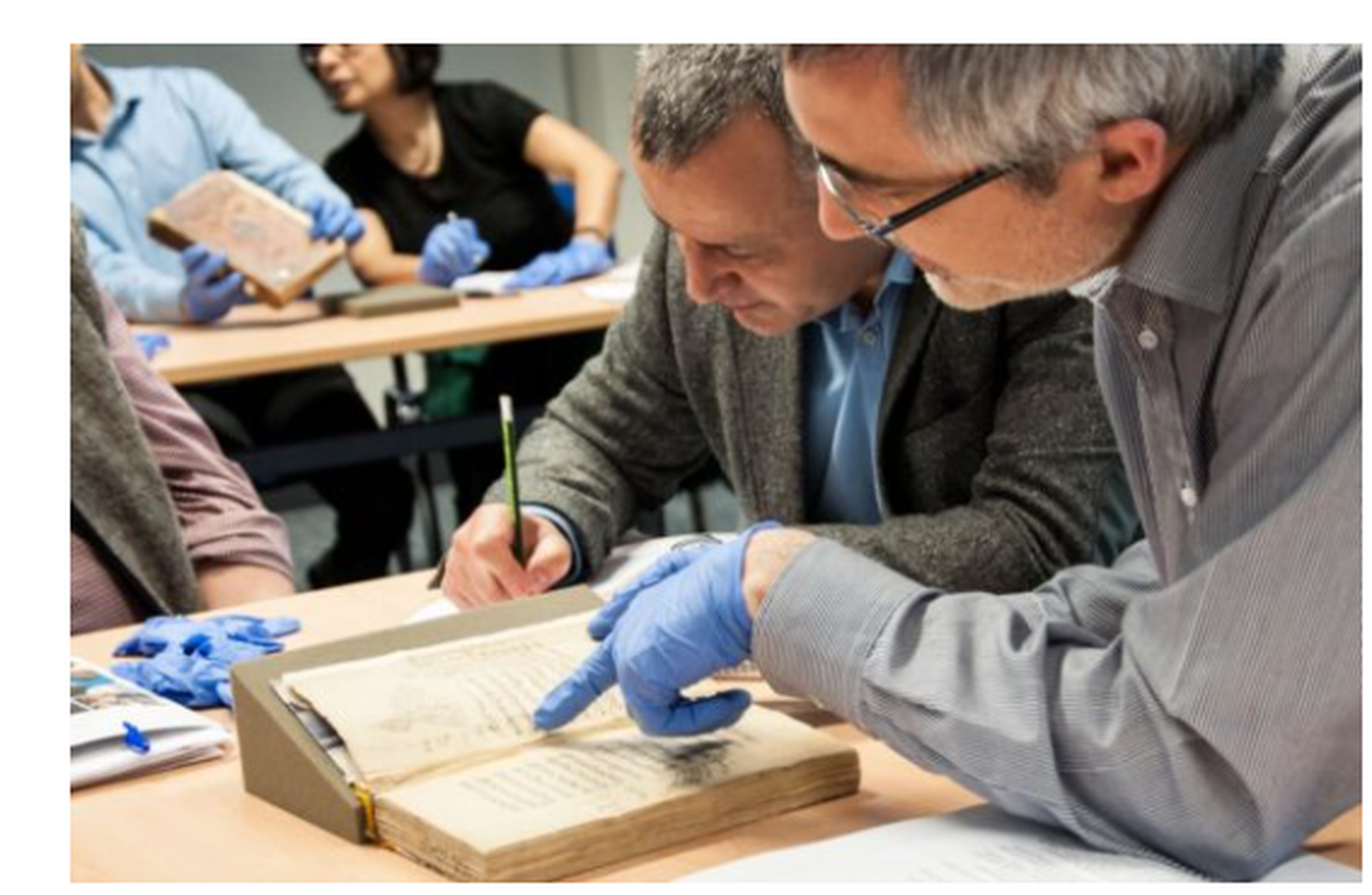
According to research from the institute of ismaili studies, the Quran holds up to seven layers of inner meaning, each revealing deeper spiritual truths. Central to unlocking these meanings is Aql (Intellect), which Ismaili philosophy considers the first and noblest creation of God. The Universal Intellect (Aql al-Kull) stands as the First Cause in the metaphysical hierarchy, possessing complete knowledge of all things at once. Understanding this concept requires exploring the relationship between divine and human intellect, the role of the Imam as the living manifestation of this Universal Intellect, and how Aql bridges the esoteric (Batin) and exoteric dimensions of faith. We'll examine how Ismaili thought uniquely positions intellect not as opposed to faith, but as inseparable from it, guiding both spiritual understanding and worldly progress.
Key Takeaways
Discover how Ismaili philosophy uniquely positions intellect (Aql) as the bridge between divine wisdom and human understanding, offering profound insights for spiritual and intellectual growth.
• Aql al-Kull (Universal Intellect) is the first creation of God, containing all knowledge and serving as the source from which human intellect derives its capacity for understanding.
• The Imam serves as the living mazhar (manifestation) of Universal Intellect, reflecting divine wisdom without incarnation and providing spiritual guidance through ta'wil (esoteric interpretation).
• Faith and intellect are inseparable twin brothers in Ismaili thought, rejecting any conflict between reason and spirituality while emphasizing their mutual dependence for complete understanding.
• Ismaili philosophy harmonizes din (religion) and duniya (world), demonstrating that spiritual growth and intellectual pursuit strengthen each other rather than compete.
• Ta'wil unlocks the Quran's seven layers of inner meaning, revealing progressively deeper spiritual truths accessible through the Imam's guidance and intellectual contemplation.
This framework offers a unique perspective where spiritual development and rational inquiry work together, providing a comprehensive approach to understanding both divine mysteries and worldly knowledge.
What is Aql in Ismaili Philosophy
Aql al-Kull (Universal Intellect): The First Creation
The word aql derives from the Arabic verb aqala, meaning to restrain or confine, suggesting that true intelligence emerges when we restrain the lower self. In Ismaili cosmology, the Universal Intellect represents the first act of creation, brought into existence through ibda (origination out of nothing) by God's Command (amr). This corresponds to the concept of nous in Plotinus's Neoplatonism.
Fatimid Ismaili thinker Abu Yaqub al-Sijistani described the Universal Intellect as originating rather than being created, underscoring its unique ontological status relative to all other beings. The Intellect is eternal, incorporeal, and perfect, encompassing all that can and does exist. It contains the forms, essences, and archetypes of all things, including qualities and eternal necessary truths.
Furthermore, the Universal Intellect possesses the divine names and attributes traditionally ascribed to God in the Quran and Islamic theology. Sijistani called it the "Lord of Lords" and "the wellspring of all corporeal and spiritual light". God delegated the governance of spiritual and corporeal realms to this Universal Intellect.
Aql al-Juz'i (Partial Intellect): Human Connection to the Divine
The human intellect in each person exists as a trace or reflection of the Universal Intellect. This partial intellect (aql al-juz'i) connects us to the source of all being and distinguishes us from the rest of the physical world. Man possesses individual intellect as a trace of Universal Intellect in addition to a part shared from Universal Soul, presenting in his self the whole cosmos as a microcosm.
Human knowledge ultimately flows from the Intellect since acquired acts of intelligence are outpourings of the Universal Intellect upon partial souls. The human soul receives divine support (ta'yid) from God's Command through the Universal Intellect's mediation.
The Distinction Between Divine and Human Intellect
The distinction operates on ontological levels. The Universal Intellect knows all things at once, possesses complete perfection, and lacks nothing. In truth, there is no motion or time within the Intellect's realm. Conversely, the partial intellect requires teaching and instruction. The partial intellect cannot produce anything from itself that it has not first seen, whereas the Universal Intellect originates all things and has no needs.
The Metaphysical Hierarchy: From Al-Mubdi' to Creation
Allah (Al-Mubdi'): Beyond All Attributes
In Ismaili cosmology, reality divides into three realms. God stands as the Unconditioned Reality, absolutely beyond being and non-being, beyond all attributes. Al-Mubdi' (The Originator) transcends space, time, matter, substance, accident, cause, and effect. Nothing and no one ever becomes Allah.
God's absolute transcendence means that the categories of cause and effect cannot be attributed to Him or denied of Him. His Ipseity transcends existence and its opposite, non-existence. In light of this radical transcendence, Ismaili thinkers apply the principle of double negation to every divine predication, including existence itself.
The Universal Intellect as Mazhar of Divine Light
The term mazhar suggests a mirror that reflects or manifests an object without incarnating it physically or causing any alteration to the object. The Universal Intellect serves as the mazhar of Divine Light, the receptacle of God's creative command. All attributes traditionally ascribed to God in conventional theology properly pertain to the Universal Intellect, while keeping in mind that God Himself transcends such qualities.
Nafs al-Kull (Universal Soul) and the Material World
The Universal Soul holds the numerical position of two, while one belongs to the Intellect. Called "the Second" because nothing amongst higher or lower principles stands higher than it below the Intellect. The Soul came into existence through the instrumentality of the Intellect.
Unlike Intellect, the Soul is deficient, seeking perfection. This desire causes its movement and activity. The Soul serves as the architect of the material world, initiating movement in creation. Its purpose is to produce souls through which it attains perfection and ultimately reaches the position of the Intellect.
The Relationship Between Intellect and Soul in Creation
The Intellect produced the Soul outside time through its perfect nature. Conversely, the Soul creates within time because movement generates temporal existence. The Soul acquired both movement and quiescence potentially from the Intellect. Its activity begins with the pursuit of perfection, whereas its quiescence derives from connection with the self-sufficient Intellect.
The Imam as the Living Mazhar of Aql al-Kull
The Concept of Mazhar (Locus of Manifestation)
The metaphysical hierarchy establishes a critical question: how does humanity access the Universal Intellect? The answer lies in understanding mazhar, an Arabic noun meaning "locus of manifestation". This term denotes a mirror that reflects or manifests an object without physically embodying it or altering it.
When applied to the Imam, mazhar denotes that the Imam's pure human soul serves as a mirror upon which the Universal Intellect is reflected, without materially descending into the person of the Imam. Consequently, the Divine Light remains transcendent in the higher spiritual realm and manifests in the created world while never materially entering it.
How the Imam Reflects the Universal Intellect
The Ismaili Imam is the mazhar of this Universal Intellect or Light of Imamat. In truth, the person of the Imam becomes the place in which God's Word is settled as well as the place in which God's Word dwells. The Imam represents the Word of God, which is the First Intellect, manifested in this world.
This manifestation operates without incarnation. The Imam's body and soul remain human, while what is reflected in the soul is divine. No divinity attributes attach to the humanity or actual person of the Imam; rather, his physical existence serves as a veil for the Divine Light of Allah, equated with the Universal Intellect.
Ta'yid (Divine Support) and Spiritual Guidance
The human soul receives divine support (ta'yid) from God's Command through the Universal Intellect's mediation. Seekers of perfection search until they merge in the Holy Light of the Imam, who possesses insights emanating from the Universal Intellect. Through adherence to the path set forth by the Imams, humans ascend toward perfection.
The Role of Ta'wil (Spiritual Interpretation) in Accessing Inner Knowledge
Ta'wil shares its Arabic root with awwal, meaning "first" or "beginning". It signifies turning towards and returning to the origin, uncovering the Qur'an's original essence across multiple stages, revealing progressively deeper spiritual meaning.
Ismaili Muslims follow an esoteric branch of Islam where written meanings remain accessible only to those within the Jamat. The Imam continues the ta'wil and ta'lim (teaching) of Allah's final message, operating as the current master and lord of spiritual interpretation. Throughout Ismaili history, ta'wil was taught by da'is, who wereappointed by the Ismaili Imam to instruct believers.
Aql in Practice: Balancing Din and Duniya
Intellect and Faith are One in Ismaili Thought
For Fatimid Ismaili thinker Nasir Khusraw, faith is light; the ignorant resembles a dead person, but the seeker of knowledge comes back to life. The faithful follow the light of science, which is part of real faith. Faith and intellect function as twin brothers; God accepts not one without the other.
Haydar Amuli described intellect as the foundation and religious law as the building upon it. Without intellect, worship becomes deficient because religious law does not cover all aspects of belief. Similarly, intellect alone, without religious law, cannot encompass all aspects of worship.
The Role of Reason in Islamic Thought and Ismaili Views on Science and Religion
Aga Khan IV states unequivocally that conflict between faith and science does not exist in Islam. Knowledge is twofold: that revealed through the Prophet and that which man discovers through his own intellect. These involve no contradiction, provided man remembers his mind is itself God's creation.
Using Intellect for Spiritual and Material Progress
Islam fundamentally believes spiritual and material worlds are inextricably connected. This balance between din and dunya entails fulfilling spiritual obligations and acquiring knowledge for others' benefit.
The Institute of Ismaili Studies and Scholarly Pursuit of Knowledge
The Institute of Ismaili Studies, established in 1977, is dedicated to scholarship on Islam and Muslim societies, with particular focus on Ismaili and Shi'i studies.
Conclusion
Aql stands as the cornerstone of Ismaili philosophy, bridging the divine and human realms. By the same token, it unites faith with reason, spiritual understanding with worldly progress. The Imam serves as the living guide, reflecting the Universal Intellect and making its wisdom accessible through ta'wil. In fact, we've seen how this framework positions intellect not against faith, but as inseparable from it. Use this understanding to appreciate how Ismaili thought harmonizes din and duniya, offering a path where spiritual growth and intellectual pursuit strengthen one another.


